
Fortnite Creators Can Enable Proximity Chat on Custom Islands in 2026
Fortnite proximity chat lets UEFN creators enable distance-based voice in custom islands for social stealth, tense negotiations, and spatial puzzles.
Epic Games’ creative toolkit has long transformed Fortnite from a single battle royale into a sprawling constellation of player-built worlds. Among the quieter but more transformative additions is Proximity Chat, a feature that lets sound itself become an architectural material. Instead of voice traveling across a server like a flat broadcast, proximity chat behaves like a campfire glow that fades with every step — only those standing within the creator-defined radius can hear a speaker. Although the feature first surfaced in early access during Chapter 5 Season 4 in 2024, its role in custom islands has continued to mature into 2026, giving UEFN creators a tool for building social stealth, tense negotiations, and distance-based puzzles.
According to Epic Games’ Creator Portal, proximity chat is not available in core modes such as Battle Royale, LEGO Fortnite, or Fortnite Reload. Players dropping at the best landing spots in Reload cannot eavesdrop on nearby competitors. The feature only exists on custom-made islands in Creative or UEFN modes, and it is off by default. That default silence is important: a creator must deliberately flip the switch, meaning every sound radius is a design choice rather than a platform assumption.
🔊 How to Enable Proximity Chat in a Custom Island
For builders eager to experiment with voice-based gameplay, the process is straightforward.
-
Open the Island Settings Menu in Creative or UEFN.
-
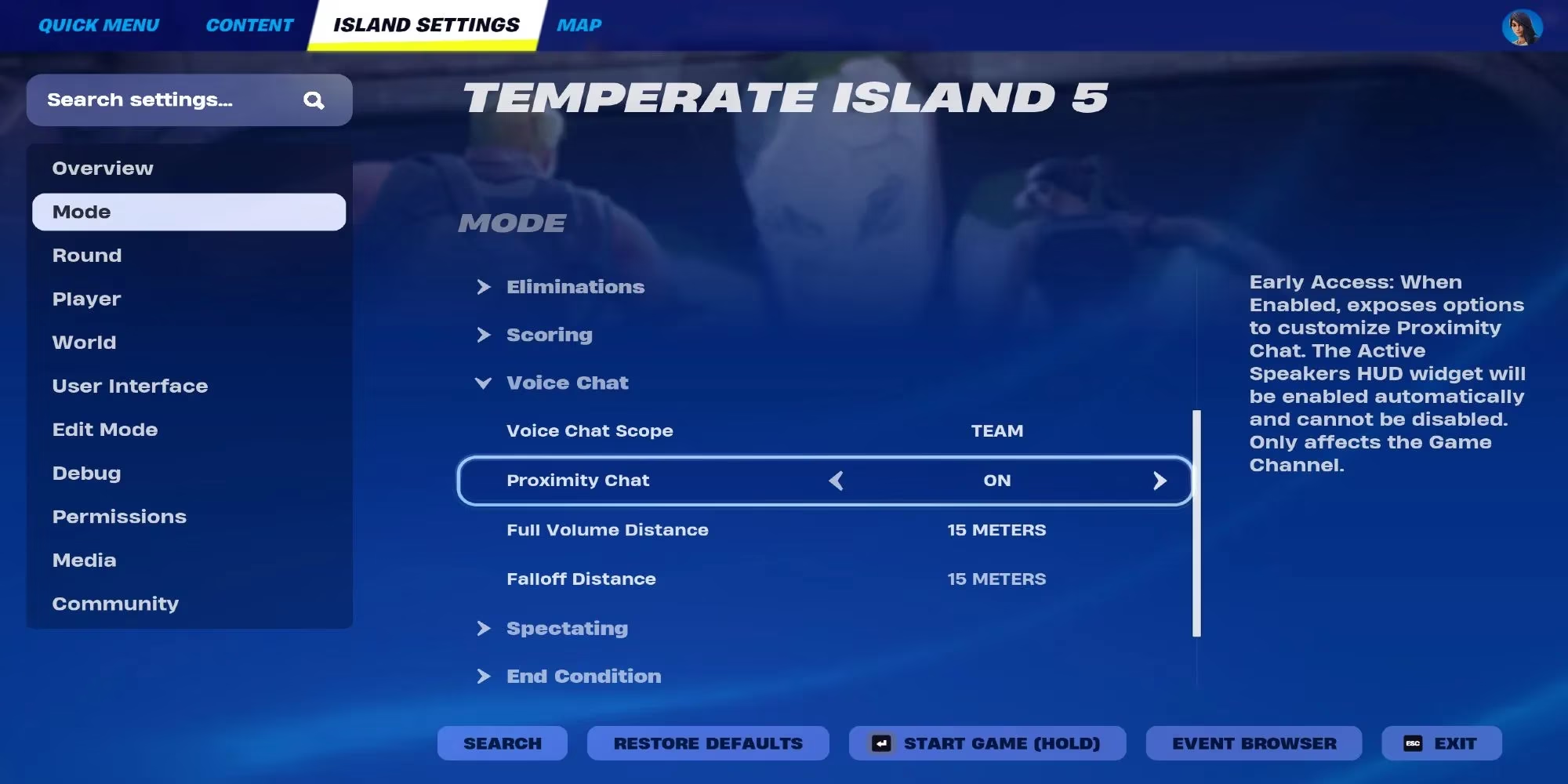
Navigate to the Voice Chat settings tab.
-
Toggle Proximity Chat from the default off position to on.
-
Adjust the chat volume to control how loud player voices appear.
-
Tweak the sound’s drop-off distance to shape the acoustic boundary around each speaker.
Once enabled, every player inside that island sees a new HUD element showing who is currently talking. This visual cue acts like a sound-level meter in a recording studio — it turns invisible audio into legible information, helping players recognize whether a whisper is coming from a teammate three meters away or from an enemy just beyond a wall. For creators, that HUD feedback is especially valuable when testing how far a voice should travel before it dissolves into silence.
🛡️ Rules and Early Access Realities
Proximity Chat does not exist in a moderation vacuum. Epic’s reporting, muting, and blocking systems still apply to voice traffic. In other words, proximity chat is not a lawless alley; it is another monitored street in the Fortnite ecosystem. Rule-breakers who use the feature to harass others can still be reported and face action under the Fortnite Community Rules. This safeguard matters for creators who worry that open voice zones might become a magnet for abuse. The presence of a HUD speaker indicator also makes it easier for players to identify who is talking, which can streamline both social play and moderation.
Creators should also remember that proximity chat remains an early-access feature, even as 2026 brings continued polish and stability. Some islands may still encounter distance quirks, dropped audio packets, or slight HUD delays. Much like a newly laid trail that still has soft mud at the edges, the feature works best when builders test its boundaries before publishing. Player feedback continues to feed Epic’s refinements, so custom islands benefit from iterative tuning and community reporting.
The table below summarizes where proximity chat can and cannot be used.
| Game Mode | Proximity Chat Availability |
|---|---|
| Creative / UEFN custom islands | Available, off by default |
| Battle Royale | Not available |
| LEGO Fortnite | Not available |
| Fortnite Reload | Not available |
🧩 Why Proximity Chat Changes Creative Design
At its best, proximity chat turns a custom island into an acoustic stage. Imagine a horror map where a monster’s growl becomes louder only when it is close, or a social deduction game where private conversations can be overheard by anyone inside a small circle. These experiences are possible because distance-based sound creates a porous boundary between public and private speech. The feature gives UEFN creators a new gameplay mechanic, not just a communication convenience.
With the early Chapter 5 Season 4 rollout now well behind and 2026 bringing a steady rhythm of UEFN improvements, creators have more reason than ever to experiment with proximity chat. Whether the goal is a tense hide-and-seek mode, a cooperative puzzle that requires players to relay messages across distance, or simply a more immersive roleplay space, the ability to shape sound is a quiet revolution in Fortnite’s creative toolkit. For builders who treat audio as a level-design element, proximity chat is the missing dial that finally makes voice part of the map itself.