
Fortnite Developers Slam Tesla Cybertruck Crossover
Fortnite battle royale’s Tesla Cybertruck crossover sparked controversy, dividing fans and developers during the Wrecked season.
Fortnite has never shied away from wild crossovers, but the decision to put Tesla Cybertrucks into the game during the Wrecked season turned into one of the most awkward brand moments in recent battle royale history. Even in 2026, when Fortnite has pushed its crossover machine into nearly every corner of pop culture, this one still gets cited as a case study in how not to pick a partner. Players were already split over that season’s heavy focus on vehicles, and the arrival of the angular electric truck pushed plenty of them from mildly annoyed to outright frustrated.
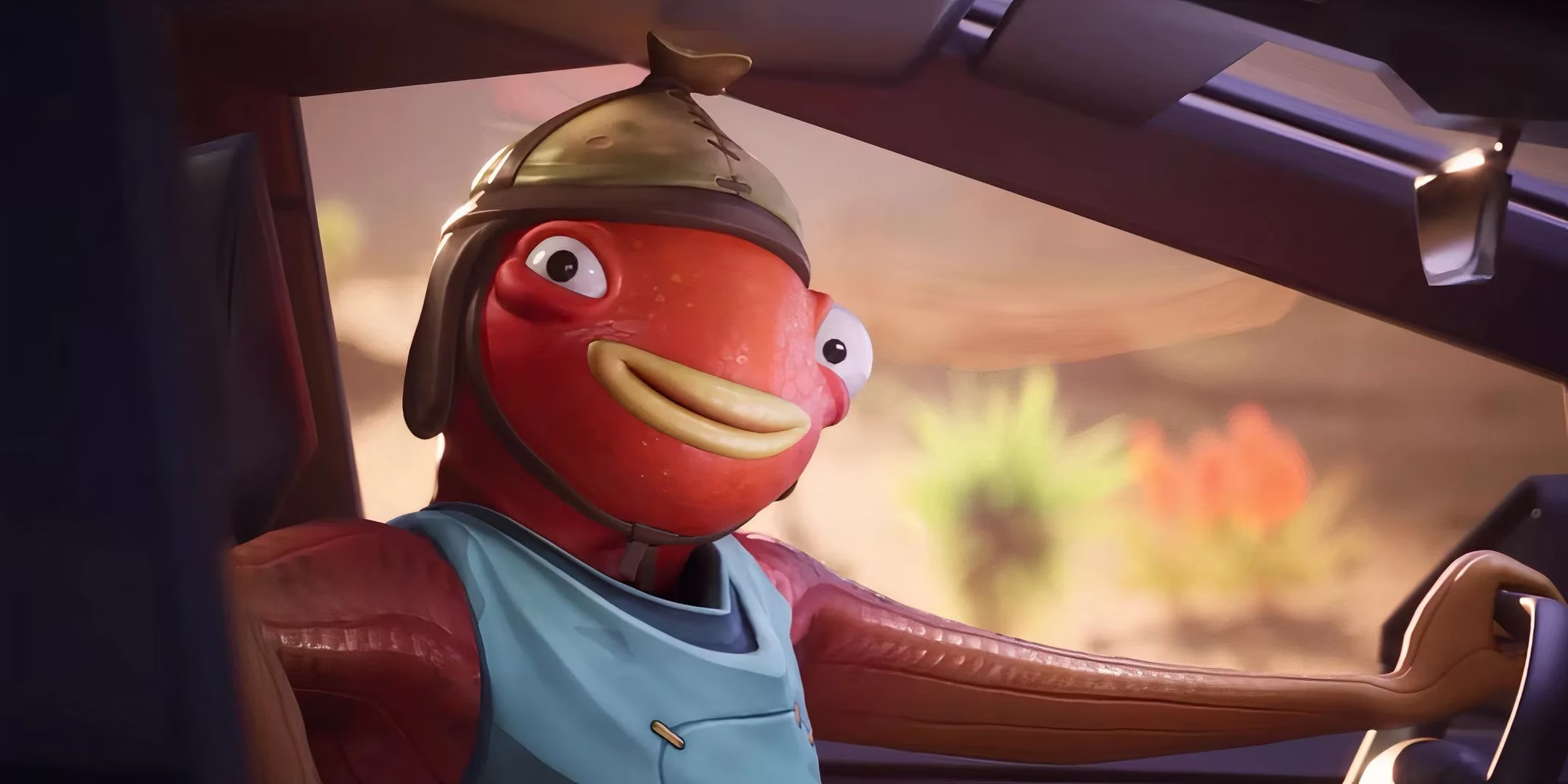
The problem was not simply that the Cybertruck looked strange next to Fortnite’s usual roster of cars and crossover skins. Fans also pointed to Elon Musk’s controversial public persona as a reason they did not want his product showcased in the game. For many, Fortnite had built its reputation on fun, chaotic collaborations, but this particular partnership felt more like a spotlight for a polarizing figure than a playful addition. That sentiment spread quickly across social media, with players asking Epic Games to reconsider how it picks its partners.
Then the story took an even more surprising turn: it was not only players who were unhappy. Several Epic Games developers made their frustration public, and their reactions were as blunt as the Cybertruck’s design. That is rare. Developers usually stay quiet about corporate partnership decisions, especially when their names are attached to the work.
One of the most striking comments came from Fortnite UI artist Toby Sperring. He shared the Cybertruck trailer and explained that he had done the quest UI art for the collaboration. While he said he was proud of the work he and his team delivered, he added that it was very disappointing that Epic chose to collaborate with that product and company. That kind of statement is not the typical polished PR line—it sounds like someone who felt stuck between doing a good job and disagreeing with the job itself.
Fortnite Festival producer Kyle Wynn went even further. He reminded players that they should vote with their wallets and that their reactions on social media are a tangible factor in how Epic measures success. He also described the Cybertruck as looking “f**king silly” and used a very strong insult aimed at Elon Musk. Wynn’s message was clear: if players wanted to send a message, spending choices would speak louder than forum threads.
Then there was Robby Williams, a Fortnite executive producer. He made sure to note that his tweets represented his own opinions, but he did not hold back after that. Williams told anyone who spotted the Cybertruck to “Destroy on sight” and signed off with a middle-finger emoji. That is not exactly the kind of endorsement a crossover partner dreams about.
So why does this matter? For one thing, it shows a gap between Epic’s business decisions and the people who actually build Fortnite. Crossovers are often chosen for reach, money, and buzz, but developers are not always consulted about whether a collaboration fits the game’s spirit. When the people making the content are publicly criticizing it, players get a rare look behind the curtain. It also raises a fair question: if the developers themselves are not excited about a collaboration, how are players supposed to be?
This was not the first controversial collaboration in gaming, and it will not be the last. But the Cybertruck situation stood out because the internal pushback was so visible. Most developers vent privately, if they vent at all. Here, three different Epic employees—from UI art to production—spoke out in quick succession. That suggests the discomfort was not limited to one or two people.
The reaction also highlights how player feedback and developer feedback can overlap. Players often believe that Epic only listens to revenue charts, but Wynn’s comments about voting with wallets confirmed that purchases and engagement do influence future decisions. The Cybertruck may have been added because it attracted attention, but attention is not the same as approval.
A quick breakdown of the developer reactions:
-
🎨 Toby Sperring, UI artist – Proud of the work, disappointed by the company choice.
-
🎵 Kyle Wynn, Festival producer – Told players to vote with their wallets and mocked the truck’s look.
-
👔 Robby Williams, executive producer – Said to destroy the Cybertruck on sight and added a middle-finger emoji.
Could Epic have handled this differently? Probably. A simple internal conversation might have revealed how many team members were uncomfortable with the partnership before the trailer ever went live. Instead, the collaboration shipped, and the negativity came from both the community and the studio itself. That is a lose-lose situation for a game that usually thrives on goodwill.
Looking back, the Tesla Cybertruck crossover is a useful reminder that not every big-name brand is a natural fit for a colorful battle royale. Fortnite has survived plenty of controversies, and its ability to bounce back is impressive. But if Epic wants its next crossover to feel exciting rather than exhausting, it may want to listen not only to players, but also to the developers who have to build the content. After all, nobody wants to spend weeks designing quests for a vehicle they cannot stand.
Maybe the real lesson is simple: fun collaborations should be fun for everyone involved—players and developers alike. If the people making the game are rolling their eyes, that energy eventually reaches the community.