
Fortnite Rocket Racing Support Ends: What Epic’s Sunsetting Means for the Metaverse
Fortnite Rocket Racing's decline highlights Epic Games' risky live-service strategy and impacts player trust in new metaverse modes.
I’ve been watching Fortnite’s evolution closely since Chapter 5 redefined the game in late 2024, turning it from a battle royale juggernaut into a full-blown metaverse. Epic Games added LEGO Fortnite, Fortnite Festival, and Rocket Racing alongside the core Battle Royale mode. It was a bold pivot, but not every gamble pays off. Now, in 2026, the fate of Rocket Racing serves as a cautionary tale — one that reshapes how we players trust live-service expansions.
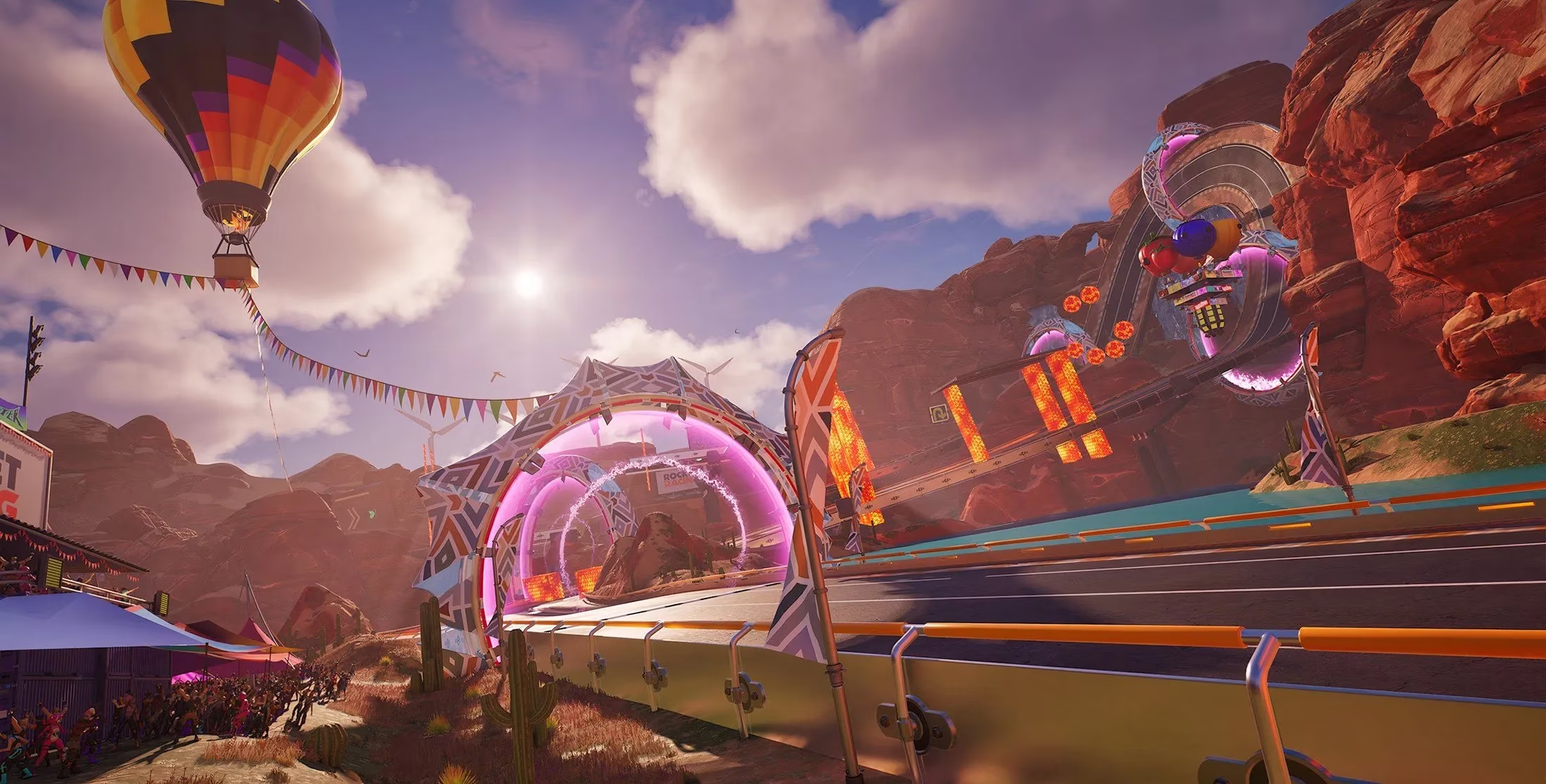
I still remember the hype when Rocket Racing launched. Psyonix and Epic seemed like a dream team, merging Rocket League’s vehicular DNA with Fortnite’s massive audience. The mode offered competitive racing, themed updates, and a shop full of cross-compatible car cosmetics. Yet, behind the neon-lit tracks, things were already shaky. Layoffs during Chapter 4 had stretched Epic’s teams thin, and splitting resources across four major modes made deep content upkeep nearly impossible. Fast forward to today, and that strain has become impossible to ignore.
A recent statement from the Rocket Racing development team confirmed what many feared: themed updates are dead, and no more developer-made maps are coming. The announcement was slipped almost casually between ranked mode tweaks and bug fixes. The team essentially handed the keys over to UEFN (Unreal Editor for Fortnite) creators, suggesting that if players want fresh tracks, they should build them themselves. The only remaining official support? Rotating quests, new ranked periods, and fresh purchasable vehicle cosmetics.
This isn’t just a quiet sunset — it’s an abandonment occurring less than two years after the mode’s debut. And honestly, it’s not shocking if we look at the numbers. Rocket Racing consistently suffered from low player counts. Gameplay felt lackluster compared to dedicated racers, and many cosmetics were criticized for being overpriced. But here’s the rub: Epic set a dangerous precedent by yanking support while still selling items for that same mode. Players who invested cash into decals, wheels, and boosts for a mode that’s now essentially in maintenance mode are left with a bitter taste.
More than just disappointment, I’m feeling a genuine erosion of trust. Fortnite built its reputation partly on rapid response to player feedback. Epic would tweak, vault, or rework mechanics with lightning speed. Now, we’ve seen the developer willingly walk away from a full-fledged mode when engagement waned, leaving its community to fill the void. If Rocket Racing can be so casually sidelined, what’s stopping Epic from doing the same to Fortnite Festival or even future experiences?
Let’s examine the current state of Fortnite’s metaverse modes:
| Mode | Status (2026) | Player Confidence |
|---|---|---|
| Battle Royale | Thriving, constant updates | High |
| LEGO Fortnite | Steady content, active team | Moderate |
| Fortnite Festival | Regular seasons, growing | Cautious |
| Rocket Racing | No themed updates, UEFN-only maps | Very Low |
As Chapter 6 unfolds, Epic will have to work double-time to convince players to spend both time and money on new modes. Word of mouth spreads fast; once a community feels burned, they hold back their wallets. I’ve seen friends hesitate to buy Festival instruments or jam tracks now because they can’t shake the “will this be sunsetted too?” thought. The optics are rough. Instead of gracefully retiring Rocket Racing and refunding cosmetic purchasers, Epic seems content using UEFN creators’ labor to keep the mode on life support just to maintain a shopfront.
That strategy feels exploitative. UEFN creators pour passion into maps that enrich the ecosystem, but their work shouldn’t be the sole pillar propping up an official mode. I love that Fortnite empowers creators, yet when the developer’s own roadmap shrinks to quests and cosmetic drops, it’s clear that the mode exists more as a monetization channel than a genuine gaming experience.
Looking ahead, I believe Epic can recover. A transparent roadmap for remaining modes, better communication about long-term plans, and a commitment not to abandon experiences where live microtransactions exist would go a long way. Perhaps introducing a “sunset policy” that guarantees refunds or cross-mode cosmetic compensation could rebuild faith. But until then, nothing in Fortnite’s metaverse feels truly permanent — a sobering reality that even the most enticing shop tab can’t gloss over.
This chapter closed with a hard lesson: when a developer stretches itself too thin, players are the ones holding the empty cosmetic garage. I still love what Fortnite represents, but Rocket Racing will always stand as a warning beacon on the track. 🏁