
Fortnite's Doctor Doom Redefined A Gaming Menace, And Other Marvel Titles Should Take Notes
Fortnite's Doctor Doom is more menacing than the comics, with a trophy room of horrors that redefines creative cruelty.
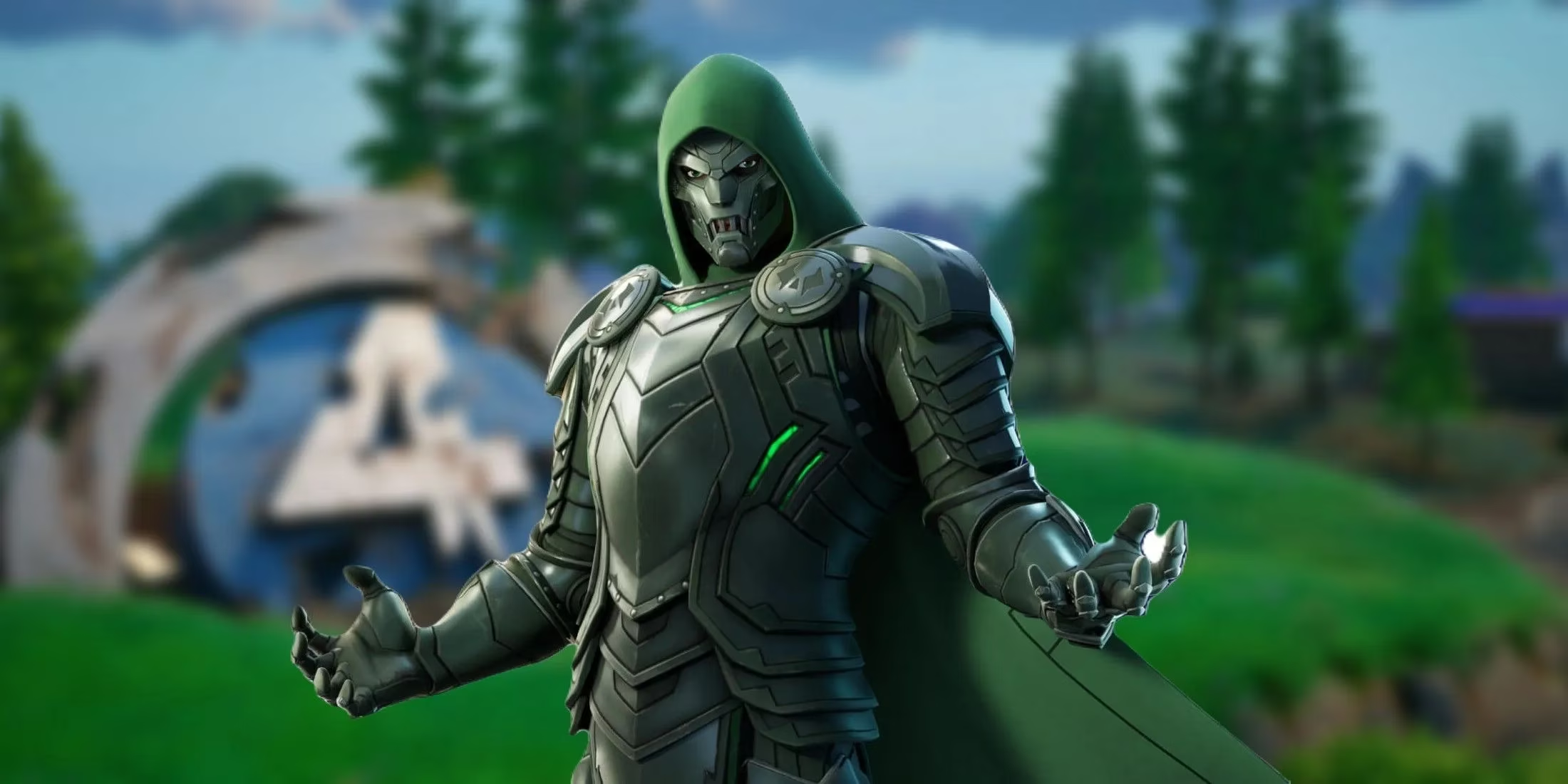
Nobody expected a battle royale title to deliver one of the most spine-chilling incarnations of Victor Von Doom, yet here we are. In the years since Fortnite dropped its Doom-centric season, the memory of Latveria's ruler walking through a landscape strewn with his victims still feels less like a crossover and more like a horror epilogue. Let’s be real—if someone back in 2023 had whispered that Epic Games would out-menace the comics, they would have been laughed out of the room.
Doctor Doom has always been a video game fixture, popping up as a boss fight or a playable skin across countless titles. But 2024 ignited a full-blown renaissance for the character. He became the centerpiece of a sprawling Fortnite narrative just as the Marvel Cinematic Universe was gearing up to cast him as its next cosmic-level threat. The timing was no accident. What Epic did with Doom, however, went far beyond a simple promotional tie-in. They turned him into the apex predator of an entire multiverse—a move that left the more timid interpretations in the dust.
A Trophy Room That Defied Expectations
From the moment players dropped onto the island, the horror was undeniable. Doom’s lair was not a fortress; it was a macabre gallery. The enormous corpse of Galactus floated silently in the bay, a severed monument to what should have been an unkillable world-eater. That alone would have been enough to cement Doom’s status, but the developer kept piling on evidence of his rampage. Versions of Silver Surfer, Thanos, Ultron, Magneto, Namor, and even Doctor Strange had all been cut down, their shattered artifacts displayed like hunting trophies. The message was unmistakable: the food chain had been rewritten, and Doom sat on top.
Yet the truly cruel artistry was reserved for his oldest enemies. Mister Fantastic suffered the most disturbing fate—his body crushed into a twitching, living ball that still seemed to breathe in agonizing loops. The Thing had been contorted into a grotesque throne, rocky limbs bent at angles that ignored physics and dignity. Human Torch’s heart was carved out to fuel a fireplace that crackled with eerie warmth. Invisible Woman’s cell was a glass cage holding nothing but an empty chair, the air heavy with the implication that her invisible corpse was on permanent display. This was not the work of a cartoony villain. This was genuine menace, rendered with a creative cruelty that felt bracingly mature for a game often associated with banana costumes and dance emotes.
Fortnite has a reputation for borrowing characters without drastically reshaping them—sandbox-friendly caricatures that respect brand guidelines. With Doom, that rulebook was incinerated. The Epic team leaned into his Machiavellian grandeur and his bottomless hatred, especially toward Reed Richards. By transforming superhero death into a chilling art installation, they made Doom feel more dangerous than most triple-A narrative games ever achieve. It was a masterclass in show-don’t-tell villainy.
What Other Marvel Titles Can Learn
The gaming landscape has shifted considerably over the past two years. Marvel Rivals launched with its own version of Doom as a central antagonist, drawing direct comparisons to Fortnite’s version. While Rivals delivered a mechanically polished experience, some voices in the community still point to the Battle Royale as the gold standard for atmosphere. The lesson is clear: a true Doom threatens the world not just through firepower, but through his terrifying intellect and his willingness to twist the knife.
With The Fantastic Four: First Steps having hit theaters in 2025 and re-energizing pop-culture interest in Marvel’s First Family, there is renewed chatter about a standalone Fantastic Four game. Any studio lucky enough to tackle that project should study Fortnite’s Doom with intense focus. His power level was handled perfectly—he didn’t just defeat Galactus through brute force; he orchestrated a downfall that felt like a dark science project. His egomania was woven into the environment itself, with banners of Latveria fluttering above mass graves. Most importantly, his hatred for the Four was personal, intimate, and almost unbearable to witness. That emotional core elevates him from a run-of-the-mill boss to an unforgettable nemesis.
Even for non-Fantastic Four titles, the approach holds value. A lawful, genteel Doom is intriguing, but his wrath should never be understated. Fortnite reminded us that Victor Von Doom is at his best when he is equal parts tyrant and tormented artist—someone who will pause a conquest to ensure his enemies’ suffering is both eternal and elegantly arranged. In an era where Marvel games are multiplying faster than ever, ignoring that nuance would be a mistake. Players want villains who make them uncomfortable, who leave a lasting chill.
Looking ahead into 2026, Fortnite has moved on to other crossovers and original narratives, but the shadow of Doom’s season lingers like a dark star. New players still stumble upon archived lore videos and recoil at the sight of the Thing-throne. It’s a moment that redefined what a live-service game can do with licensed villains, and it’s a lesson the entire industry should carry forward into the next generation of Marvel adaptations.