
The Dark Side of AI: My Journey with Digital Darth Vader
AI-powered Darth Vader and artificial intelligence in gaming spark heated debates on ethics, legacy, and the future of digital entertainment.
In the ever-evolving landscape of gaming, I find myself standing at the precipice of a new frontier. The year is 2026, and the integration of AI into our virtual worlds has reached unprecedented heights. As I navigate the pixelated realms of Fortnite, I cannot help but reflect on the controversy that erupted one year ago when AI-powered Darth Vader first graced our screens, forever altering the discourse surrounding artificial intelligence in gaming.
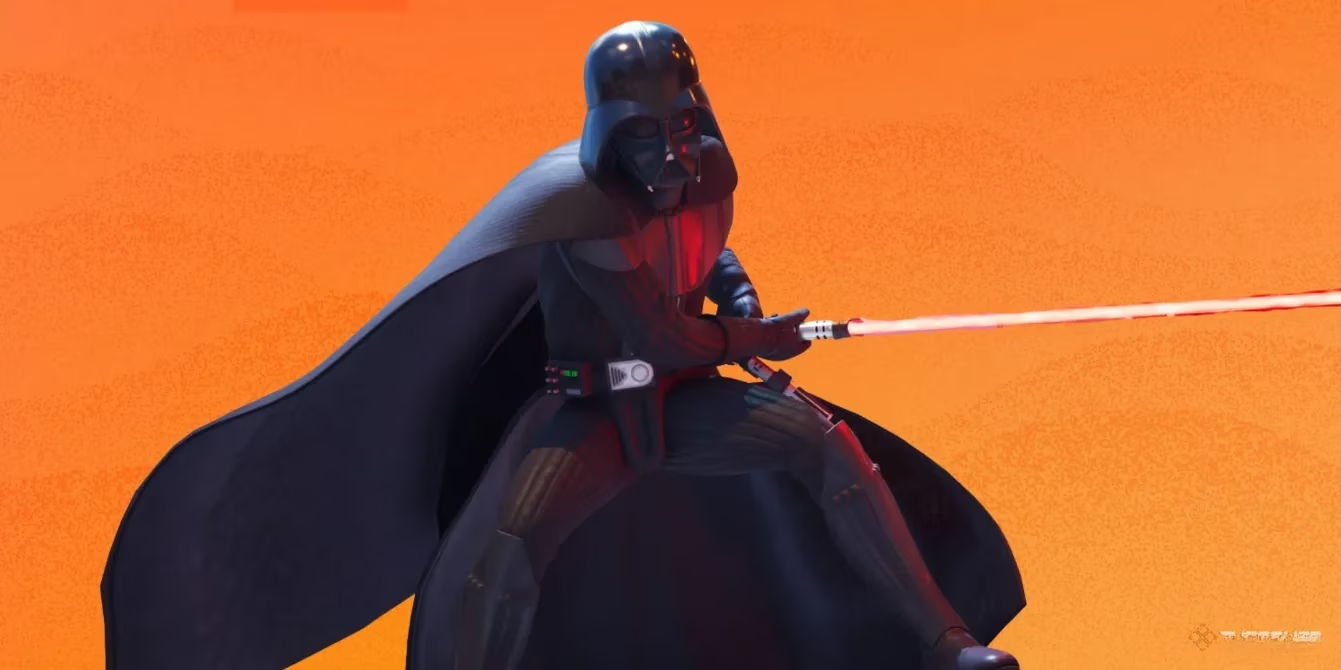
Remember when we could simply enjoy a game without contemplating the ethical implications of our entertainment? Those days seem as distant as Tatooine's twin suns now. The AI Vader implementation marked a turning point – a moment when the digital and human worlds collided in ways both fascinating and disturbing.
The Voice from Beyond
I still recall my first encounter with the digital Dark Lord. His voice, so hauntingly familiar, echoed through my headset – the unmistakable baritone of James Earl Jones, resurrected through algorithms and code. But was this truly honoring his legacy, or merely exploiting it?
The voice that once commanded the Death Star now responded to my random queries about Family Guy and pop culture references. Is this what we've reduced one of cinema's most iconic villains to? A chatbot in a black helmet?
Jones' family granted permission, stating: "James Earl felt that the voice of Darth Vader was inseparable from the story of Star Wars, and he always wanted fans of all ages to continue to experience it." Their blessing provided legitimacy, but did it truly address the deeper concerns?
The Ethics of Digital Resurrection
As I stand in the virtual battlefield, I cannot help but ponder: What does it mean to be an actor in 2026? When our voices, our very essence, can be captured, replicated, and manipulated long after we've departed this mortal coil?
The implementation sparked fierce debate:
-
😡 Anti-AI Advocates: Viewed it as exploitation regardless of permission
-
🤔 Industry Observers: Worried about precedent for replacing living actors
-
🌟 Tech Enthusiasts: Celebrated the "endless potential" for future content
-
🎭 Working Actors: Expressed concern about job security
I've spent countless hours in Discord servers and virtual lounges discussing these questions with fellow gamers. The conversations are rarely simple, often devolving into heated arguments about progress versus preservation.
The Darker Side of the Dark Side
Perhaps most troubling was how quickly this technological marvel was corrupted. Within hours of AI Vader's debut, players had manipulated the system to produce offensive content. The Sith Lord who once force-choked imperial officers was now being coaxed into uttering slurs and making racist remarks.
What does this say about us as a gaming community? Have we become so desensitized to technological boundaries that our first instinct is to test their limits in the most offensive ways possible?
Looking Forward in a Galaxy Not So Far Away
Now, in 2026, AI character integration has become commonplace. What began with Vader has expanded to numerous franchises and personalities. Some developers have implemented stricter safeguards, while others have abandoned the technology altogether following backlash.
I find myself asking: Where do we draw the line? When does homage become exploitation? When does innovation become intrusion?
The gaming landscape has been forever altered by these questions. Voice actors now negotiate specific clauses regarding AI replication in their contracts. Some refuse to work with companies known for aggressive AI implementation. Others embrace it, seeing it as inevitable evolution.
My Personal Conflict
As a professional gamer who makes a living from these virtual worlds, I exist in a constant state of contradiction. I marvel at technological advancements while questioning their implications. I enjoy AI-enhanced experiences while worrying about the human creators they might displace.
Is it possible to embrace the future without abandoning our values? Can we advance technology while respecting artistic integrity?
I don't have definitive answers. Perhaps none of us do. But as I don my headset each day and enter these digital realms, I carry these questions with me, hoping that by continuing to ask them, we might find our way to a future where technology and humanity coexist in harmony.
Until then, I'll be here, battling in virtual arenas, conversing with digital ghosts, and wondering what James Earl Jones himself would think of his posthumous performance – a voice from the past speaking endlessly into our future.
| AI Implementation Pros | AI Implementation Cons |
|---|---|
| Preserves iconic performances | Potential exploitation of legacy |
| Creates new content possibilities | Threatens living actors' livelihoods |
| Extends franchise longevity | Dilutes authentic performances |
| Approved by Jones' family | Quickly abused by toxic players |
| Technical innovation | Ethical regression |
As Darth Vader himself might say (or might not, depending on the algorithm): The power of technology is strong, but at what cost to our humanity?